
Pool Leak Detection Guide for Lafayette Homeowners
Pool Leak or Evaporation? How Lafayette Pool Owners Can Tell the Difference
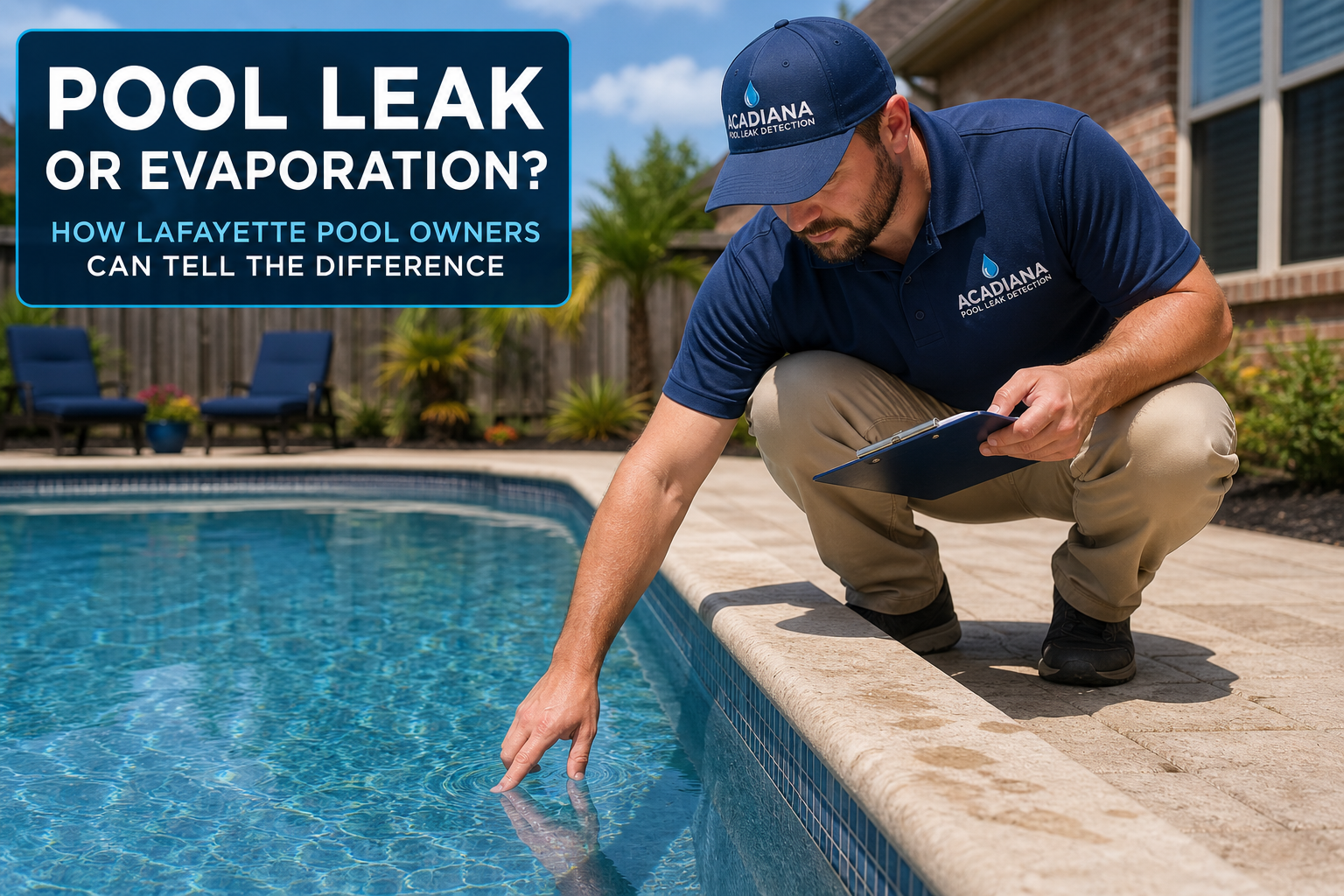
A swimming pool naturally loses water, especially during hot Louisiana weather. But when the water level keeps dropping faster than expected, many homeowners are left asking the same question: is my pool leaking, or is it just evaporation?
The answer matters. Evaporation is normal. A pool leak can waste water, increase chemical use, create wet areas around the pool, and lead to repair decisions that should not be based on guessing. For homeowners in Lafayette, Youngsville, Broussard, and the surrounding Acadiana area, knowing the difference can help you decide when it is time to schedule professional pool leak detection services.
Normal Pool Evaporation vs a Possible Pool Leak
Some water loss is expected. Heat, sun, wind, humidity levels, pool use, and water features can all affect evaporation. A pool that gets direct sun all day or has a running waterfall may lose more water than a shaded pool with calm water.
The concern starts when the water loss becomes steady, unusual, or difficult to explain. If you are adding water several times a week, noticing soggy spots near the pool, or seeing the water level drop below certain fittings, the issue may need more than a quick guess.
Simple rule for homeowners: evaporation usually changes with weather conditions. A leak usually keeps happening even when the weather changes.
When the signs point beyond normal evaporation, Acadiana Pool Leak Detection can help narrow down the issue through a focused pool leak detection process in Lafayette LA instead of relying on trial-and-error repairs.
Quick Comparison: Evaporation or Leak?
More Likely Evaporation
- Water loss changes with heat, wind, and sunlight
- No wet spots around the pool, deck, or yard
- Water loss slows during cooler or rainy weather
- Pool equipment appears dry
- Chemicals remain more stable
More Likely a Pool Leak
- Water level drops consistently every day
- You keep refilling the pool
- Wet areas appear near the pool or equipment
- Air bubbles show up in return lines
- The water drops to the same level repeatedly
Homeowner Leak Concern Guide
This simple visual guide shows which signs usually create the most concern for pool owners deciding whether to schedule leak detection.
Note: This guide is educational and based on common homeowner concerns. Actual leak sources should be confirmed through proper inspection and detection.
The Bucket Test Can Help You Start
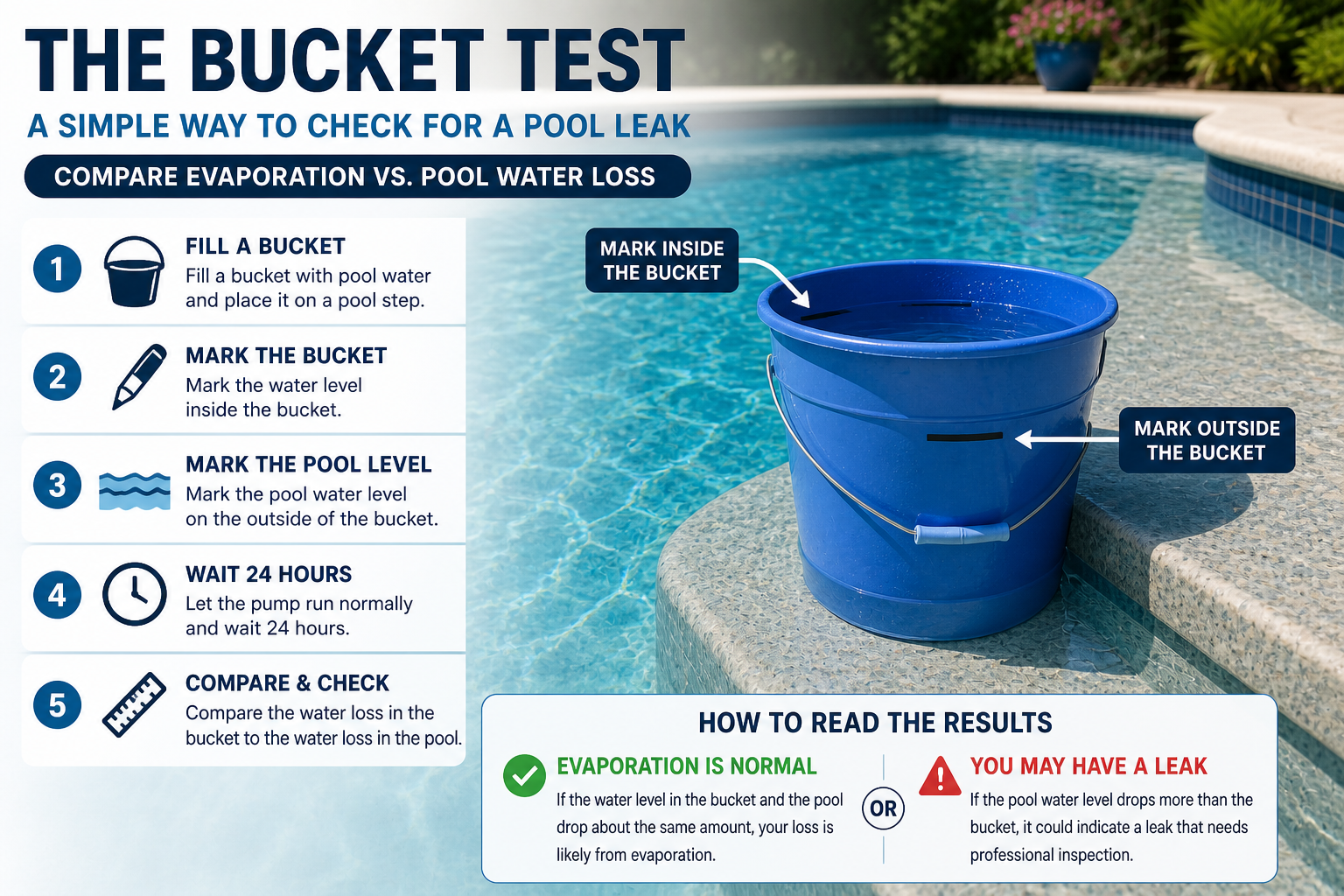
The bucket test is one of the simplest ways to compare pool water loss against normal evaporation. It does not locate the leak, but it can help a homeowner decide whether the water loss deserves a closer look.
Basic Bucket Test Steps
- Fill a bucket with pool water and place it on a pool step.
- Mark the water level inside the bucket.
- Mark the pool water level on the outside of the bucket.
- Wait 24 hours with the pump running normally.
- Compare the water loss inside the bucket to the water loss in the pool.
If the pool loses noticeably more water than the bucket, that may point toward a leak. If both levels drop about the same amount, evaporation may be the main cause.
Important: the bucket test is a starting point, not a full diagnosis. It will not tell you whether the issue is in the skimmer, pool shell, light, return line, suction line, or underground plumbing.
Signs the Problem May Be More Than Evaporation
Evaporation does not usually create physical warning signs around the pool. A leak often does. When homeowners call for residential pool leak detection in Lafayette LA, the concern is often more than just a low water level.
Watch for these signs:
- Wet or soft spots near the pool, deck, or yard
- Water loss that continues after refilling
- Cracks, gaps, or separation near fittings or pool surfaces
- Air bubbles returning into the pool
- Pump or equipment changes that seem unusual
- Water dropping to the same level again and again
- Higher chemical demand because fresh water keeps being added
These signs do not always point to the same type of leak. Some leaks are surface-related. Others may involve the pool plumbing, fittings, skimmer, lights, or equipment-side connections.
Where Pool Leaks Commonly Happen
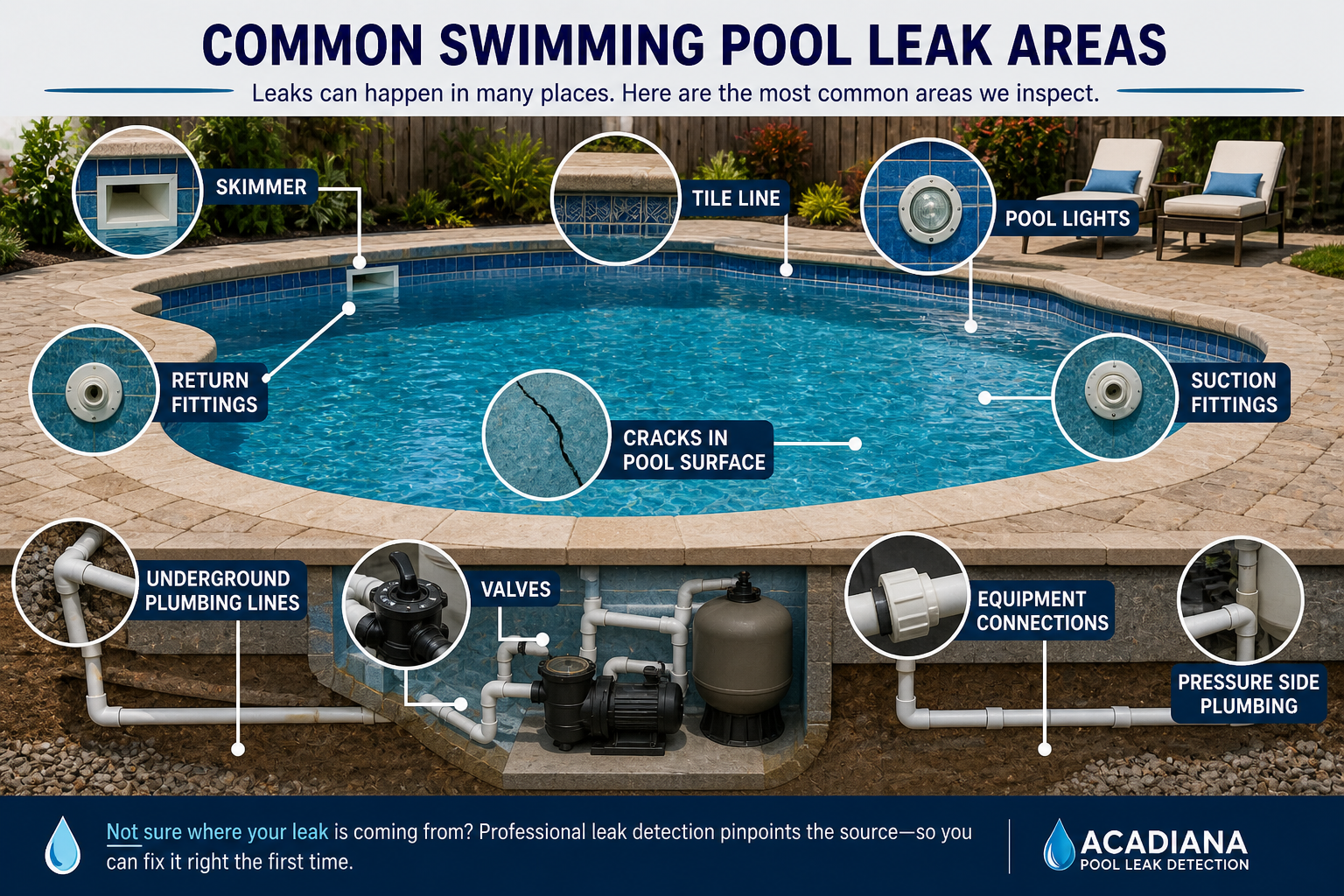
A pool can lose water from several different areas. That is why guessing can become expensive. One repair may not solve the issue if the actual leak source has not been narrowed down first.
Surface or Structural Areas
- Skimmers
- Pool lights
- Wall fittings
- Tile line areas
- Pool shell cracks
- Steps or corners
Plumbing or Equipment Areas
- Return lines
- Suction lines
- Underground pool pipes
- Equipment-side connections
- Pressure-side plumbing
- Valves and fittings near equipment
If the symptoms point toward underground lines or equipment-side issues, review the dedicated service page for pool plumbing leak detection in Lafayette LA. Plumbing-related leaks often need a more focused approach than a simple surface inspection.
Why Guessing Can Cost More Than Leak Detection
Many pool owners try to solve water loss by replacing parts, adding sealants, adjusting equipment, or refilling the pool over and over. Sometimes that works. Many times, it only delays the real answer.
The problem with guessing is that different leak sources can create similar symptoms. A skimmer leak, plumbing leak, fitting leak, and structural leak can all cause water loss. Without narrowing down the source, the repair direction may be wrong from the beginning.
A better approach is to identify the most likely source first. That is why professional pool leak detection services are valuable. Detection helps homeowners move from uncertainty toward a more informed repair decision.
When Lafayette Pool Owners Should Call for Leak Detection
You do not need to wait until the pool is losing several inches of water before taking action. The earlier a leak is narrowed down, the easier it may be to protect the pool, yard, deck, and equipment from unnecessary stress.
Call for leak detection when: the pool keeps losing water, the bucket test suggests more than evaporation, wet spots appear, or you are unsure where the water is going.
Homeowners in Lafayette, Youngsville, Broussard, and nearby Acadiana communities can start by visiting Acadiana Pool Leak Detection or reviewing the full list of pool leak detection services.
What Happens After a Leak Is Found?
Leak detection is about creating a better starting point. Once the likely leak source is narrowed down, the next step is deciding what repair direction makes sense for that specific issue.
Some leaks may involve pool plumbing. Others may involve skimmers, lights, fittings, cracks, pool shell areas, or equipment-side components. The key is that repair planning should be based on stronger information instead of assumptions.
If the issue requires a repair direction after detection, visit the pool leak repair in Lafayette LA page to understand how repair planning connects to finding the source first.
Still Losing Water?
If your pool keeps losing water and you are not sure whether it is evaporation or a leak, the next step is to stop guessing. Acadiana Pool Leak Detection helps pool owners in Lafayette and surrounding areas narrow down the likely source of water loss.
Start with a clear detection process, then make a better repair decision.
Request Pool Leak DetectionFAQ: Pool Leak or Evaporation?
How do I know if my pool is leaking or evaporating?
A bucket test can help compare pool water loss against normal evaporation. If the pool loses more water than the bucket over the same period, the issue may be more than evaporation and may require pool leak detection.
How much pool water loss is normal in Lafayette LA?
Normal pool water loss depends on heat, wind, sun exposure, humidity, pool use, and water features. If the pool keeps dropping consistently and needs frequent refilling, a leak may be present.
Can a pool leak happen underground?
Yes. Pool leaks can happen in underground return lines, suction lines, pressure-side plumbing, or other pool plumbing connections. Underground pool plumbing leaks usually require a more focused leak detection process.
What are common signs of a swimming pool leak?
Common signs of a swimming pool leak include steady water loss, wet spots near the pool or deck, air bubbles in return lines, water dropping to the same level repeatedly, and increased chemical or water use.
Should I repair my pool before leak detection?
In many cases, it is better to locate or narrow down the leak source before choosing a repair direction. Repairing the wrong area can waste time and money.
Who should I call for pool leak detection in Lafayette LA?
Acadiana Pool Leak Detection helps pool owners in Lafayette, Youngsville, Broussard, and surrounding Acadiana areas narrow down possible swimming pool leaks, plumbing leaks, and water loss issues.
0 Comments