
Pool Plumbing Leak Detection Guide for Lafayette Homeowners
Signs Your Pool Plumbing Line May Be Leaking Underground
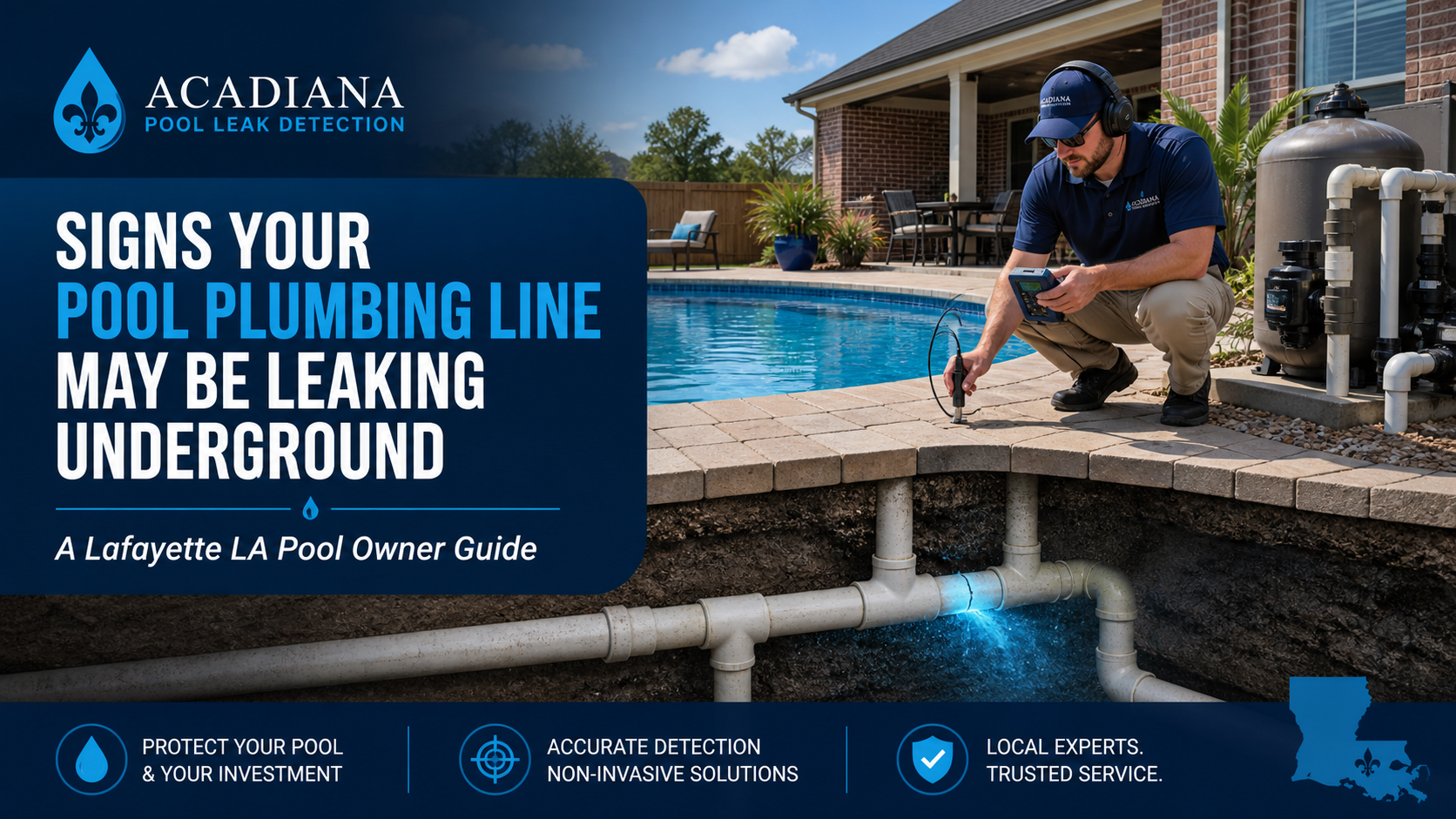
Underground pool plumbing leaks can be frustrating because the problem is often hidden. The pool may keep losing water, the yard may stay wet, or the equipment may act differently, but the actual leak source may not be visible from the surface.
For homeowners in Lafayette, Youngsville, Broussard, and surrounding Acadiana areas, the key is knowing when water loss may be connected to the pool plumbing system instead of normal evaporation, surface leaks, or equipment issues. If you are already wondering whether your pool is leaking or simply losing water to weather, start with our guide on pool leak or evaporation in Lafayette LA.
When the signs point toward underground lines, a focused pool plumbing leak detection service in Lafayette LA can help narrow down the issue before repair decisions are made.
Why Underground Pool Plumbing Leaks Are Hard to Spot
Pool plumbing lines are often buried below the deck, patio, grass, or soil around the pool. That means a plumbing leak can continue for days or weeks before the visible signs become obvious.
Unlike a crack near the tile line or a visible equipment drip, underground plumbing leaks may only show up through symptoms. You may notice the water level dropping, a soft spot in the yard, air bubbles in the return lines, or water loss that keeps coming back after refilling the pool.
Important point: underground pool plumbing leaks are not always obvious from the surface. The symptoms matter because they help point the inspection in the right direction.
If the pool is losing water and the source is unclear, the next step should be a clear detection process. You can learn more about how the inspection is approached on our pool leak detection process page.
Common Pool Plumbing Lines That Can Leak
A pool plumbing leak can involve more than one type of line or connection. The symptoms may change depending on where the issue is located and whether the line is under suction, pressure, or connected near the pool equipment.
Plumbing Lines Around the Pool
- Return lines
- Suction lines
- Skimmer lines
- Main drain lines
- Pressure-side plumbing
- Underground fittings and connections
Equipment-Side Plumbing Areas
- Pump connections
- Filter connections
- Valves
- Unions
- Heater or chlorinator connections
- Visible plumbing near the equipment pad
These areas are different from surface-related leak points such as pool lights, fittings, skimmers, tile line separation, or cracks in the pool shell. For a broader overview of water loss issues, visit our main pool leak detection services page.
Signs Your Pool Plumbing Line May Be Leaking Underground
One sign alone does not always prove that an underground line is leaking. However, when several of these symptoms happen together, pool plumbing should be taken seriously as a possible source.
1. The Pool Keeps Losing Water After You Refill It
If the pool water level drops again soon after refilling, the issue may be more than normal evaporation. This is especially true when the water loss is steady and does not seem tied to hot, windy, or sunny weather.
2. Wet or Soft Spots Appear Around the Pool
Underground plumbing leaks may push water into the soil around the pool. Homeowners may notice soft ground, wet grass, muddy areas, or water collecting near the deck or equipment area.
3. Air Bubbles Show Up in the Pool Returns
Air bubbles returning into the pool can sometimes point toward suction-side plumbing concerns or air entering the system. This does not automatically confirm an underground leak, but it is a sign worth checking when water loss is also happening.
4. The Pump Loses Prime or Acts Differently
Changes at the pump can be connected to water flow or suction-side issues. If the pump is struggling, losing prime, or behaving differently while the pool is also losing water, the plumbing system may need closer inspection.
5. The Water Level Drops Faster When the Pump Runs
Some plumbing leaks become more noticeable when the pool system is running. If water loss appears faster during normal circulation, pressure-side or return-side plumbing may be part of the concern.
6. Water Loss Slows When the Equipment Is Off
If the pool loses less water when the system is not running, that can be a clue. It does not confirm the exact location, but it may help separate equipment or plumbing-related issues from other leak sources.
7. You Notice Cracks, Settling, or Deck Movement Near the Pool
Water moving under a pool deck or through the soil can sometimes contribute to soft spots, settling, or movement. These signs should not be ignored, especially when they appear with ongoing pool water loss.
Underground Plumbing Leak vs Surface Leak
Not every pool leak is a plumbing leak. Some leaks happen around the skimmer, lights, fittings, tile line, steps, or pool shell. Others involve underground lines or connections. Knowing the difference helps avoid guessing.
Plumbing-Related Leaks May Involve:
- Return lines
- Suction lines
- Skimmer lines
- Underground pool pipes
- Equipment-side connections
- Pressure-side plumbing
Surface or Structural Leaks May Involve:
- Skimmers
- Pool lights
- Wall fittings
- Tile line areas
- Cracks
- Pool shell areas
For homeowners, this matters because the repair direction depends on the source. A plumbing leak may require a different approach than a skimmer leak, light leak, or surface crack. If you need help understanding what happens after detection, visit the pool leak repair in Lafayette LA page.
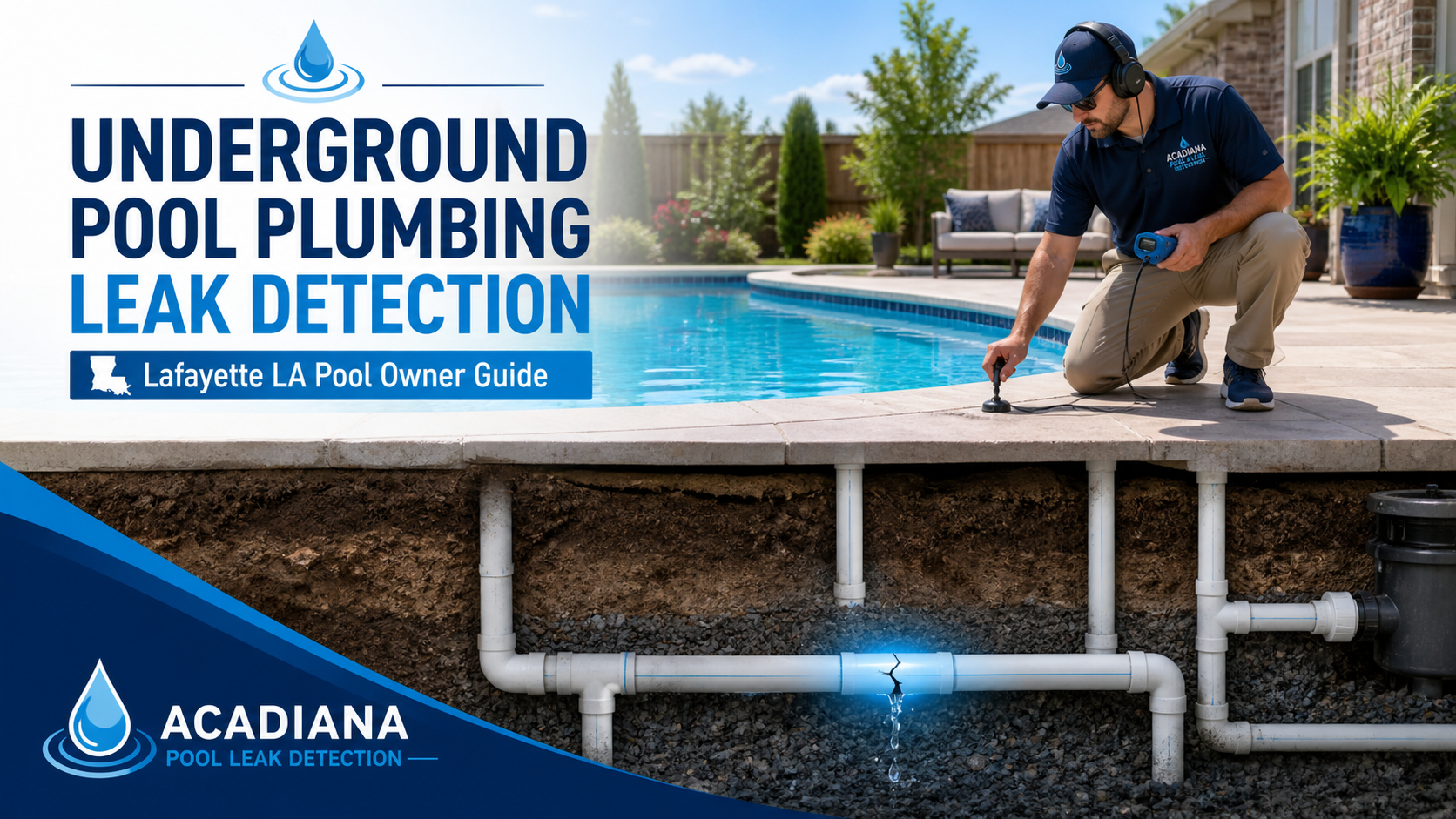
Why You Should Not Guess on Underground Pool Plumbing Repairs
Underground plumbing repairs can become expensive if the wrong area is opened, cut, or replaced. Guessing can lead to unnecessary digging, unnecessary pipe work, or repairs that do not actually stop the water loss.
The better approach is to narrow down the likely source before making a repair decision. That is the value of professional pool leak detection. It gives the homeowner stronger information before work begins.
Detection before repair matters: finding the likely source first can help reduce confusion, avoid unnecessary work, and create a more confident repair direction.
What a Pool Plumbing Leak Detection Process May Include
Every pool is different, but the goal is the same: narrow down where the water loss is most likely coming from. For underground plumbing concerns, the inspection may focus on how the pool behaves while the system is running, whether symptoms point to suction or return lines, and whether the water loss appears connected to the plumbing system.
To better understand the full inspection flow, visit the pool leak detection process in Lafayette LA page.
When Lafayette Homeowners Should Call for Pool Plumbing Leak Detection
You should consider pool plumbing leak detection when the pool keeps losing water and the symptoms point below the surface. Wet ground, recurring water loss, air in the return lines, or changes in pump performance can all be signs that the plumbing system deserves attention.
This is especially important for residential pool owners who are trying to protect the yard, deck, equipment, and pool structure from ongoing water loss. For homeowner-specific information, review our residential pool leak detection in Lafayette LA page.
Call for help when: your pool keeps losing water, wet areas appear near the pool, the pump acts differently, or you suspect an underground line may be involved.
Think Your Pool Plumbing Line May Be Leaking?
Underground pool plumbing leaks should not be handled by guessing. Acadiana Pool Leak Detection helps pool owners in Lafayette and surrounding Acadiana areas narrow down possible plumbing leaks, water loss issues, and hidden leak concerns.
Start with detection first, then make a better repair decision.
Request Pool Plumbing Leak DetectionFAQ: Underground Pool Plumbing Leaks
How do I know if my pool plumbing line is leaking underground?
Signs may include steady water loss, wet or soft spots near the pool, air bubbles in return lines, pump performance changes, or water loss that changes when the equipment is running.
Can underground pool plumbing leaks cause wet spots in the yard?
Yes. If an underground pool line is leaking, water can move into the soil and create wet grass, soft ground, muddy areas, or moisture near the pool deck or equipment area.
Does air in the pool returns mean there is a plumbing leak?
Air bubbles can point toward suction-side or equipment-related issues, but they do not always confirm an underground leak by themselves. When air bubbles happen with water loss, the plumbing system should be checked.
Should I dig up my pool plumbing if I think there is a leak?
It is usually better to narrow down the likely leak source before digging or replacing plumbing. Guessing can lead to unnecessary work and may not solve the actual water loss problem.
What type of pool lines can leak underground?
Underground leaks may involve return lines, suction lines, skimmer lines, main drain lines, pressure-side plumbing, or buried fittings and connections.
Who should I call for pool plumbing leak detection in Lafayette LA?
Acadiana Pool Leak Detection helps pool owners in Lafayette, Youngsville, Broussard, and surrounding Acadiana areas narrow down possible underground pool plumbing leaks and water loss issues.
0 Comments